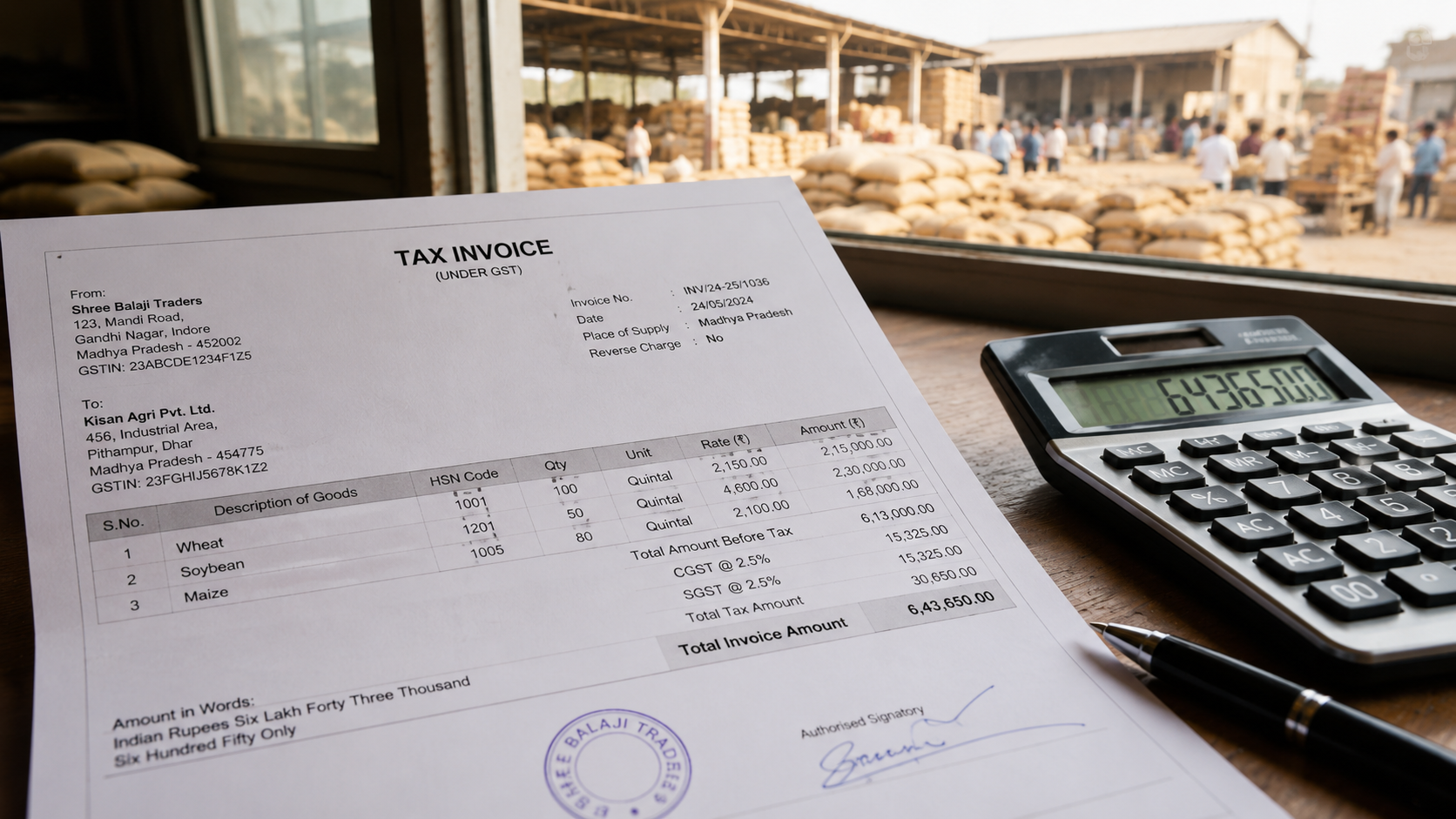
GST compliance is one of the most time-consuming tasks for mandi traders. Every month, you need to file GSTR-1, GSTR-3B, and keep TDS records up to date. Mistakes in GST filing for mandi traders can lead to notices, penalties, and input tax credit losses. Here are the most common errors and how the right software helps you avoid them.
Common GST Mistakes Mandi Traders Make
Wrong HSN Codes on Invoices
Agricultural commodities have specific HSN codes. Using the wrong code on an invoice creates mismatches in GSTR-1 and can trigger scrutiny. Many traders enter HSN codes manually and get them wrong.
Not Reconciling Purchases with GSTR-2B
If your purchase invoices do not match what suppliers have filed in their GSTR-1, your input tax credit gets blocked. Manual reconciliation across hundreds of purchase bills is extremely difficult.
Missing the GSTR-1 Filing Deadline
Late filing attracts a late fee of Rs. 50 per day for normal returns. Many small traders miss deadlines because they are still compiling data from handwritten ledgers at month end.
Errors in TDS Deduction
Mandi traders who cross the turnover threshold are required to deduct TDS at source. Manual calculation across multiple parties often leads to wrong deductions and reconciliation issues later.
How SoftTrade Solves These Problems
SoftTrade Mandi ERP auto-generates GSTR-1, GSTR-3B, and TDS returns directly from your daily billing and purchase entries. Every invoice is created with the correct HSN code already mapped. At month end, your returns are ready to download and file.
The software also keeps your party ledgers and GST data in sync, so there are no surprises during reconciliation. All records are audit-ready at all times.
File GST the Right Way
GST compliance does not have to be stressful. With the right mandi ERP software, your returns are prepared automatically as you work. Book a free demo with SoftTrade to see how it handles GST for your business.
Leave a Reply